Learning & assessment platform
Pluralsight Tech Foundations
Pluralsight · Technical lead
- Problem
- Organizations needed employees in every role—not just engineers—to understand cloud, data, AI, security, and software well enough to take part in technical decisions. Course libraries alone didn’t show whether anyone’s understanding had changed. Building a solution became one of Pluralsight’s top company priorities for several quarters.
- What I owned
- Technical direction and system architecture, leading a team of 12 engineers. I partnered with product and design on the learner experience, owned the data model, and stayed hands-on through implementation, quality, and launch.
- Key decisions
Measure change, not just completion
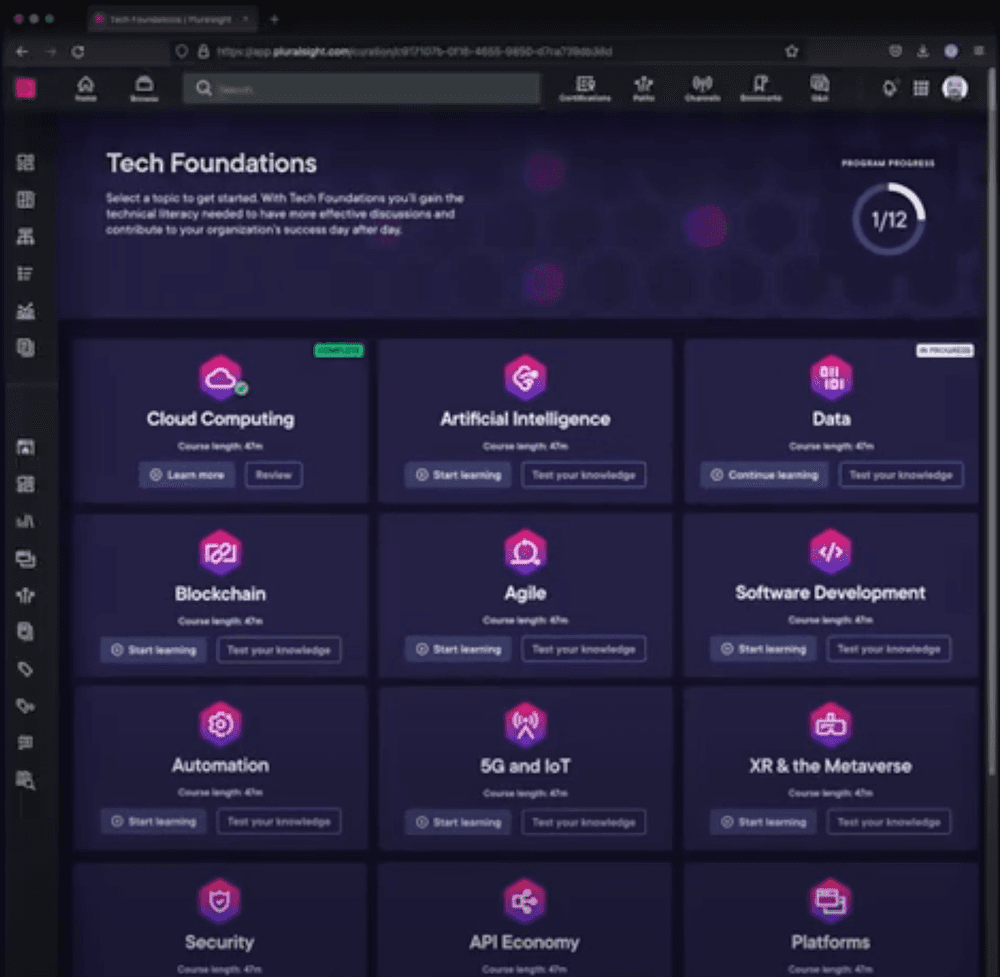
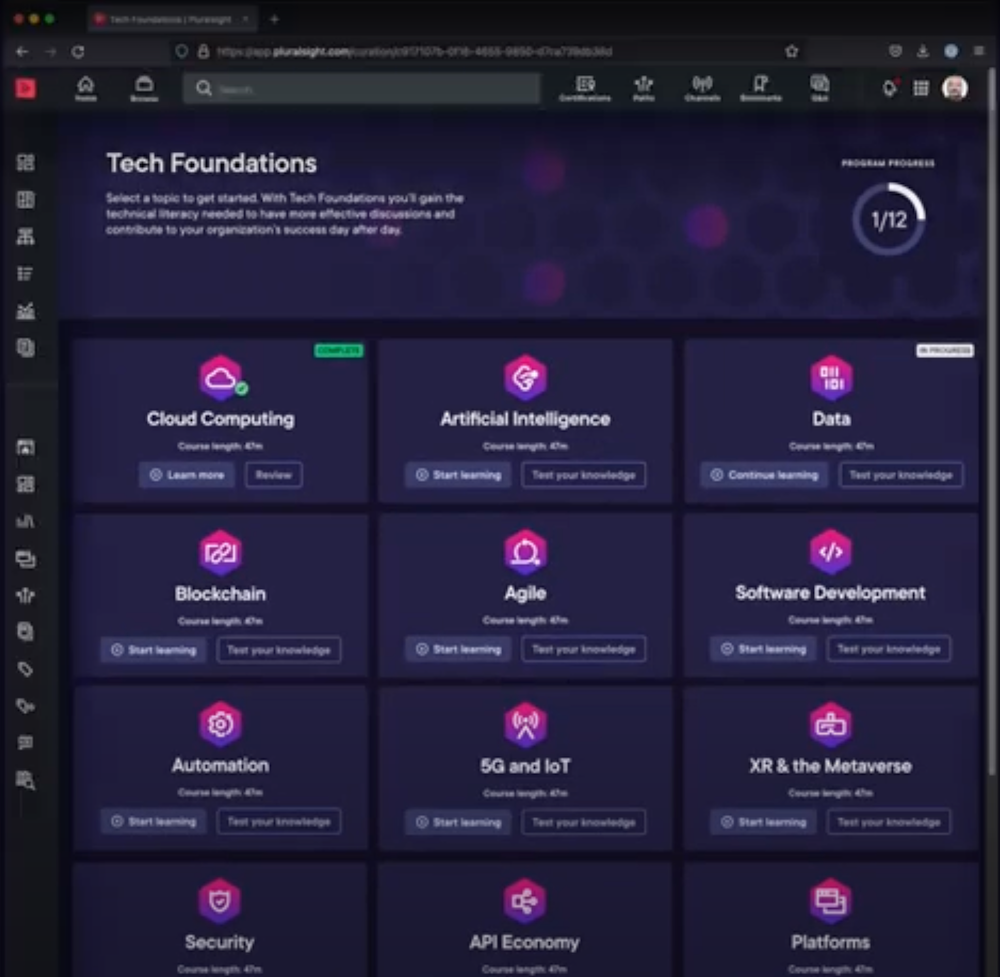
Each topic pairs a short course with a knowledge check before and after, so progress reflects what a learner can demonstrate rather than which videos they watched.
A bounded program with visible progress
Twelve focused topics with a program-level progress indicator give non-technical learners a clear, finishable path instead of an open-ended catalog.
Design for what comes next without slowing delivery
The architecture had to integrate with existing Pluralsight systems and leave room for future programs, while the team still shipped and iterated quickly.
Accessibility as a requirement
The audience was every employee in an organization, so accessibility was treated as part of the definition of done rather than a follow-up.
- Outcome
- Launched on schedule and at a high quality bar, with assessment and progress analytics that let learners and organizations track skill growth over time.
- What I learned
- People learning outside their field need a clear starting point, a sense of progress, and honest feedback about what they know. A well-placed assessment does more than measure learning—it tells the learner where to focus next.
- Technologies
- TypeScriptNode.jsExpressPostgreSQLReactKafkaKubernetesAWS
 Open full-size screenshot